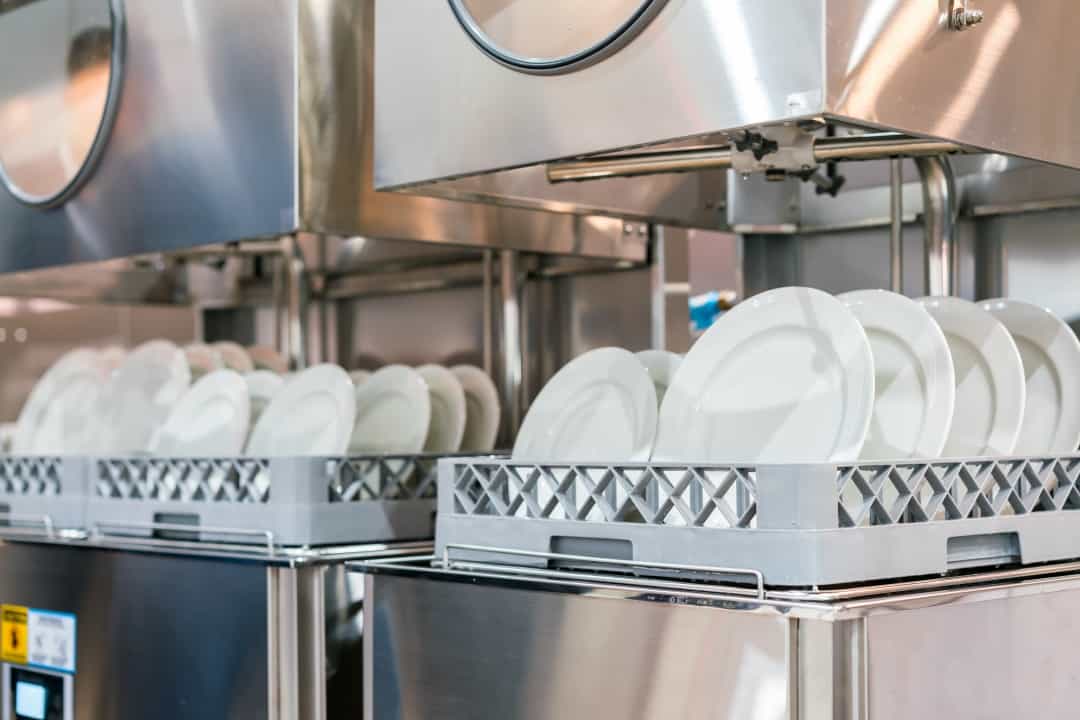
Your commercial dishwasher has one job: keep clean dishes moving through your kitchen without slowing down service.
When that machine starts leaving behind spots, food residue, or wet racks, the problem usually spreads fast. You end up with backups at the dish station, wasted labor, and questions about sanitization.
At Boer Brothers Restaurant Services, we help restaurants across Chapel Hill, Durham, Raleigh, Cary, Apex, Hillsborough, Pittsboro, and surrounding Triangle areas keep commercial dish machines working the way they should. If your dishwasher is struggling to keep up, regular maintenance can help you avoid downtime and protect your kitchen workflow.
Why dishwasher maintenance matters
A commercial dishwasher runs hard every day. Grease, food debris, scale, chemical issues, and worn parts all add up over time.
Routine maintenance helps you:
- Keep dishes, utensils, and glassware cleaner
- Reduce surprise breakdowns
- Support sanitizing performance
- Lower wasted water, energy, and chemicals
- Extend the life of your machine
For most restaurants, the real value is fewer interruptions during service.
Signs your commercial dishwasher needs service
Many dishwasher problems start small. Catching them early is the best way to avoid a bigger repair.
Watch for signs like:
- Cloudy glasses or spotting
- Food left on dishes or silverware
- Wet dishes at the end of the cycle
- Longer cycle times
- Leaks around the machine
- Bad odors
- Unusual noises
- Inconsistent results from one rack to the next
If your staff is rewashing dishes or adjusting around the machine, that is already a sign the unit needs attention.
High-temp vs. low-temp dishwashers
Most commercial dishwashers fall into one of two categories.
High-temp dishwashers
These units use high water temperature to sanitize. They can clean very effectively, but they still need regular maintenance to prevent scale buildup, heating issues, and spray problems. Commercial dishwashers generally fall into two main categories: high-temperature and low-temperature machines.
Low-temp dishwashers
These systems rely on chemical sanitizer. They often use less energy, but they need the chemical feed system to stay consistent. If sanitizer levels drift or tubing wears out, cleaning and sanitizing performance can drop quickly.
Either way, a dishwasher that isn’t being maintained will eventually cost you time, money, or both.
Daily dishwasher care your staff can handle
Good maintenance starts with simple habits at the end of every shift.
1. Scrape dishes before loading
Large food debris creates unnecessary strain on the machine.
2. Clean strainers and scrap trays
These areas fill up quickly and can affect water flow and drainage.
3. Check spray arms
Blocked spray arms often lead to poor wash results.
4. Watch for chemical or temperature issues
If something looks off, don’t ignore it. Small changes often show up before a bigger failure.
5. Clean the interior at close
Leaving buildup in the machine overnight only makes the next day harder.
6. Report changes early
Cloudy glasses, leaks, odors, and slow cycles should all be passed along right away.
What professional dishwasher maintenance should include
Daily cleaning matters, but it doesn’t replace professional service.
A proper maintenance visit may include:
- Checking wash and rinse performance
- Inspecting spray arms and nozzles
- Looking for scale buildup
- Checking drains, hoses, and gaskets
- Inspecting pumps and other wear parts
- Reviewing chemical feed performance on low-temp units
- Spotting issues before they turn into downtime
This is especially important in high-volume kitchens where even a short dishwasher outage can create major disruption.
We also offer commercial kitchen maintenance agreements that can help you stay ahead of dishwasher problems with preventive service.
Repair or replace?
Not every dishwasher problem means replacement is the right move.
In many cases, timely maintenance and repair can keep your machine going. But replacement may make more sense if:
- Breakdowns keep happening
- Repair costs keep stacking up
- Wash quality stays inconsistent
- Parts are harder to find
- Leaks, corrosion, or age are becoming major issues
If you’re unsure, the best next step is to have the machine evaluated before another busy shift puts more pressure on it.
Why restaurants across the Triangle call Boer Brothers
Restaurant equipment problems don’t stay isolated for long. If the dishwasher goes down, your whole kitchen can suffer. We serve restaurants across Chapel Hill, Durham, Raleigh, Cary, Apex, Hillsborough, Pittsboro, and surrounding Triangle areas from our Chapel Hill location.
If your commercial dishwasher is leaving behind spots, struggling to sanitize, or slowing down your back of house, we can help you get ahead of the problem.
FAQs
How often should a commercial dishwasher be serviced?
That depends on the machine, water quality, and how heavily it is used. Most restaurants benefit from daily staff cleaning plus scheduled professional maintenance.
Why are my glasses coming out cloudy?
Common causes include scale buildup, rinse issues, water quality problems, or chemical imbalance.
What is the difference between maintenance and repair?
Maintenance is routine service that helps prevent breakdowns. Repair is what you need after something stops working correctly.
Can dishwasher problems affect inspection readiness?
Yes. If dishes are not being cleaned or sanitized properly, that can create serious operational problems.
Do you service restaurants throughout the Triangle?
Yes. We serve restaurants across Chapel Hill, Durham, Raleigh, Cary, Apex, Hillsborough, Pittsboro, and surrounding Triangle areas.
Keep your dish station moving
A reliable dishwasher helps keep your kitchen faster, cleaner, and easier to manage.
If your machine is showing signs of trouble, Boer Brothers Restaurant Services can help with commercial dishwasher maintenance and repair across the Triangle. Contact us at 919-336-0271 to schedule commercial dishwasher maintenance or repair from our Chapel Hill team.